
How to get your product into shops, and what to do once it is there
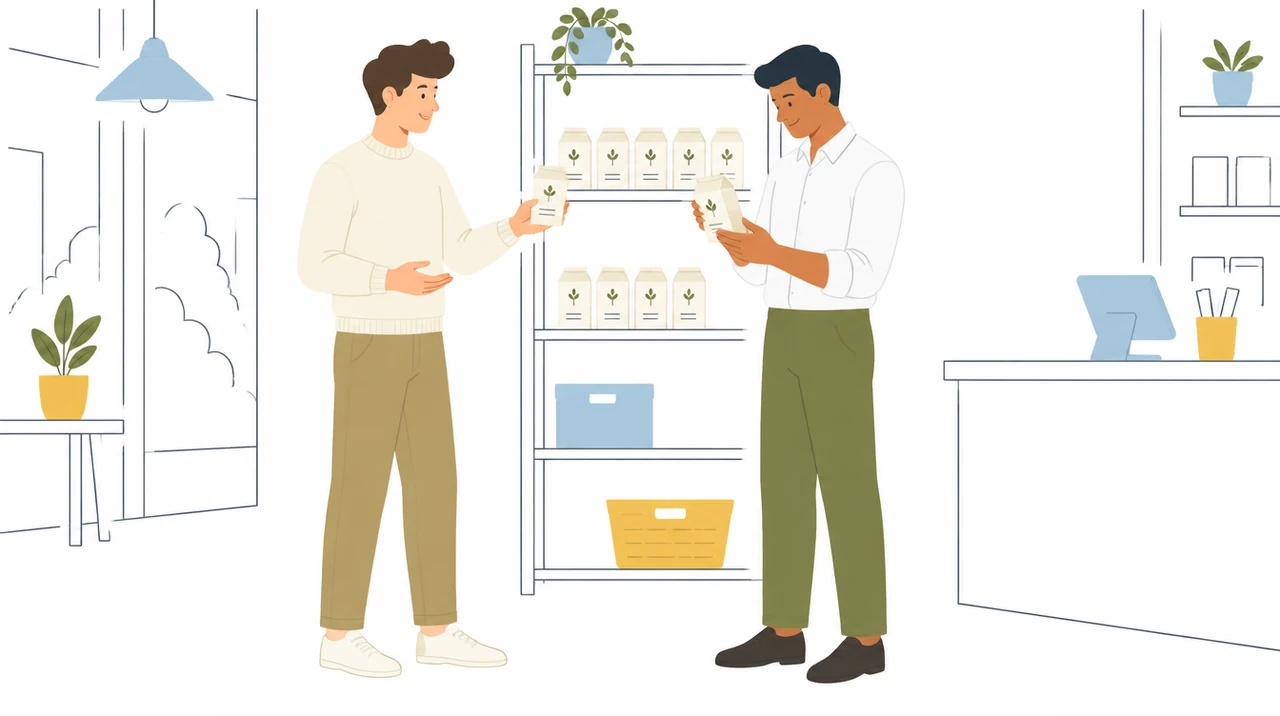
Most small brands treat retail as something that happens to them later, once they are big enough. It is usually available immediately, and an independent shop will make a decision in a single conversation while a supermarket buyer takes eleven months.
The mistake is not failing to get in. It is getting in and then doing nothing, which is how a brand ends up on forty shelves and reordered by four of them.
Start with the shops you would actually shop in
Twenty good stockists beat two hundred indifferent ones, and the difference is entirely in the selection.
Walk in first. Look at what is already on the shelf, what it costs, and whether your product would look like it belongs. If everything is £6 and yours is £28, the answer is no, and the buyer will be doing you a favour by saying so.
The shops worth the effort are the ones whose customers already buy things like yours from someone else.
Approach the person, not the company
For an independent, the buyer is usually the owner and they are usually in the shop.
Go in on a quiet weekday morning, never a Saturday and never at lunchtime. You are asking for ten minutes of somebody's attention, so ask when they have ten minutes.
Bring the product itself: one unit they can hold, one price sheet, one sentence about who buys it. Independent shopkeepers do not read pitch decks.
Say who else stocks you. If nobody does yet, say that. "You would be the first" works well on a shop that likes finding things early, and a shopkeeper who later discovers you exaggerated will not take a second order.
Leave a sample and a price sheet either way. Orders often arrive a fortnight after a conversation that seemed to go nowhere.
The numbers a buyer expects
This is where most first approaches fall apart, because the founder has priced the product for their own website and has nothing left to give.
Wholesale is 50% of retail. Some independents work on 40%, and few on less. On a product that retails at £28, the shop expects to pay £14 to £17, so your unit cost has to sit well under that.
Sale or return is normal on a first order. The shop pays for what sells and sends back what does not. That arrangement is why they will try an unknown brand at all.
Minimum orders are small. Six to twelve units is a healthy first order from an independent. A shop offering to take forty units of an unproven product is guessing, and most of those units come back.
Payment is usually 30 days after delivery, and often later. Plan the cash flow around 60 days and you will not be caught out.
Getting on the shelf is the easy half
A product that sits on a shelf and is not picked up gets returned, and a shop that has returned you once will not try again.
So the work starts at delivery.
Tell the staff what it is. Five minutes with whoever is on the till beats any point-of-sale material. They field the questions, and an assistant who has tried your product sells more of it than a card does.
Tell your own customers where to find it. Post it, and email your list. Most small brands skip this step, and it is the main reason a shop keeps one. A shopkeeper who watches somebody walk in and ask for you by name will reorder.
Ask once how it is selling. Send a short message four weeks in, as a real question rather than a chase. The answer tells you whether to make more.
Do something in the shop: a Saturday sampling session, a launch evening, a small event with their other brands. Independents need reasons for people to walk in, and a brand that brings them one stops being just another supplier.
What to do when they say no
Most will, and the reason matters more than the answer.
"Not right for us" is a real no and worth accepting gracefully. "Come back when you have more of a following" is a maybe with a condition attached, and it is worth a diary note for four months' time. "We are full until the new year" is a yes with a date on it.
Note which is which and go back when you said you would. Polite, specific persistence works well in independent retail, because few people bother with it.
Whether it is working
Three numbers, per stockist, at three months:
- Units sold through, not units delivered
- Whether they reordered without being asked
- How many of your own customers you sent them
The third one predicts the first two more reliably than anything else.
If a shop has sold through, reordered unprompted and you have sent them nobody, you have a genuinely good stockist. If they have not reordered and you never told a soul they had you, that is not their failure.