
Instagram for things you can hold
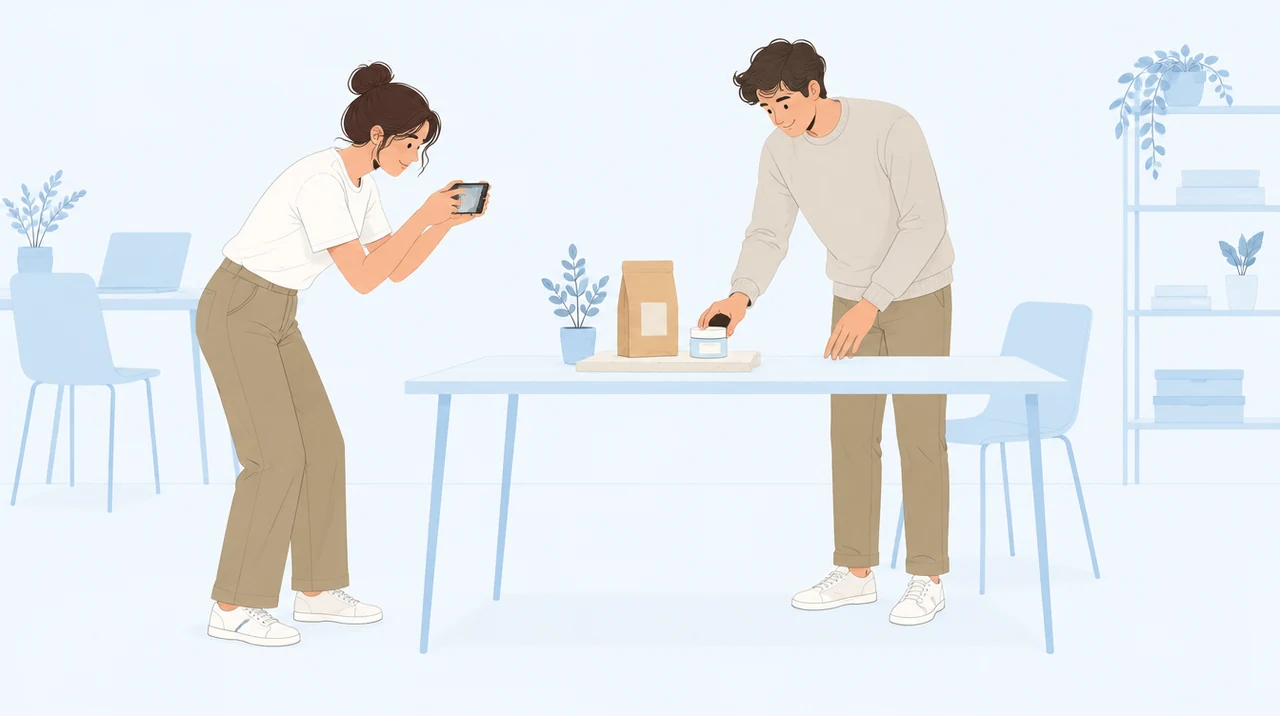
If you sell something people can pick up, Instagram is still the most direct line you have to a buyer. It is also where most small brands quietly waste a year.
The flat lay is dead and everyone kept doing it
The product on a marble surface, three sprigs of eucalyptus, shot from directly above. Every beauty and coffee brand has posted this. It performed well in 2018 and it performs badly now, because the audience has seen forty thousand of them and the format carries no information.
What replaced it is not better photography. It is the product in use, by a person, in a real place, badly lit on purpose.
The same product, two ways
Everyone has this
Centred, lit from above
Dead centre of the frame, props at equal angles, one flat light from overhead. Nothing in it tells you how big the thing is or who it is for.
Post this instead
Off centre, held, side lit
On a third, in somebody's hand, lit from a window off to one side. The hand gives you scale and texture, and the room tells you where it lives.
The specific things that work now:
Hands opening the box, pouring the cup, applying the cream, fastening the strap. Hands show scale and texture, and they suggest the thing already belongs to somebody.
Before and after, honestly. Skincare claims are regulated, so be careful what you assert. "Day one and day sixty, same lighting, no filter" stays inside the rules and convinces people more than any caption.
The thing being made: the roaster, the mixing, the labelling, the packing bench at 11pm. This is the most reliable content category for a physical product, and most brands post it once and then stop.
The mistake: the batch that split, the label that peeled, the colour that came out wrong. These posts get high engagement, and they make everything else you say more believable.
Reels are the reach, the grid is the shop
Treat them as two different jobs.
Reels get you found. Keep a product reel vertical and under 20 seconds, with the hook in the first second. The first frame has to show the product or the hand. Use the audio people are already using that week, at a volume that does not fight the visual.
The grid is what happens after. Somebody has seen one reel and tapped through, and in about ten seconds they decide whether this is a real business. Your top nine posts have to answer four questions. What is it, what does it cost, who else bought it, and how do I get one.
Put the price somewhere findable. Brands hide prices out of a fear that a number puts people off. What actually puts people off is having to work for it.
What is different for each category
For beauty, texture sells the product. Shoot close and slow, in natural light, on real skin of more than one tone. Be careful with claims. In the UK a medicinal claim moves you into a different regulatory regime. That is why compliant beauty captions say "reduces the appearance of" rather than "reduces".
For coffee, nobody can taste a photograph, so sell the ritual and the origin instead: the grind, the bloom, the pour. Name the farm and the process. The customers who care about that will tell other people. Subscription is usually where the money is, so keep making the case for the habit rather than for one bag.
For wearables, you have to prove the thing survives real life. Show it wet, scuffed, on a wrist that is doing something. Fit and sizing cause most returns on anything worn, so a plain video of the product on three different people prevents more returns than a hundred styled shots.
The number most brands watch is the wrong one
Views are not the number. A reel that does 200,000 views and sells nine units has told you something went wrong: usually that it reached people who liked the video and had no interest in the product.
Watch these instead:
Saves. For a physical product, saves track purchase intent better than anything else on the platform. Somebody who saves a post is thinking about buying.
Profile visits per thousand views. When this is low, people enjoyed the video and had no interest in who made it.
Link taps and code redemptions. Give each campaign its own discount code. Nobody needs the discount, and the code is the only reliable way to tie a sale back to a post.
Posting rhythm that is survivable
Three reels a week, two static posts, stories most days. If that is not possible, do two reels a week and stories, and drop the static posts entirely.
Batch it. One afternoon a fortnight, make everything. Shooting daily is how people stop.
The unglamorous truth about the first thousand followers
They mostly come from somewhere else. A market stall, an event, a stockist reposting you, a local newsletter, a founder with a bigger account who liked the product.
The content keeps them and converts them. Something else usually brings them.